
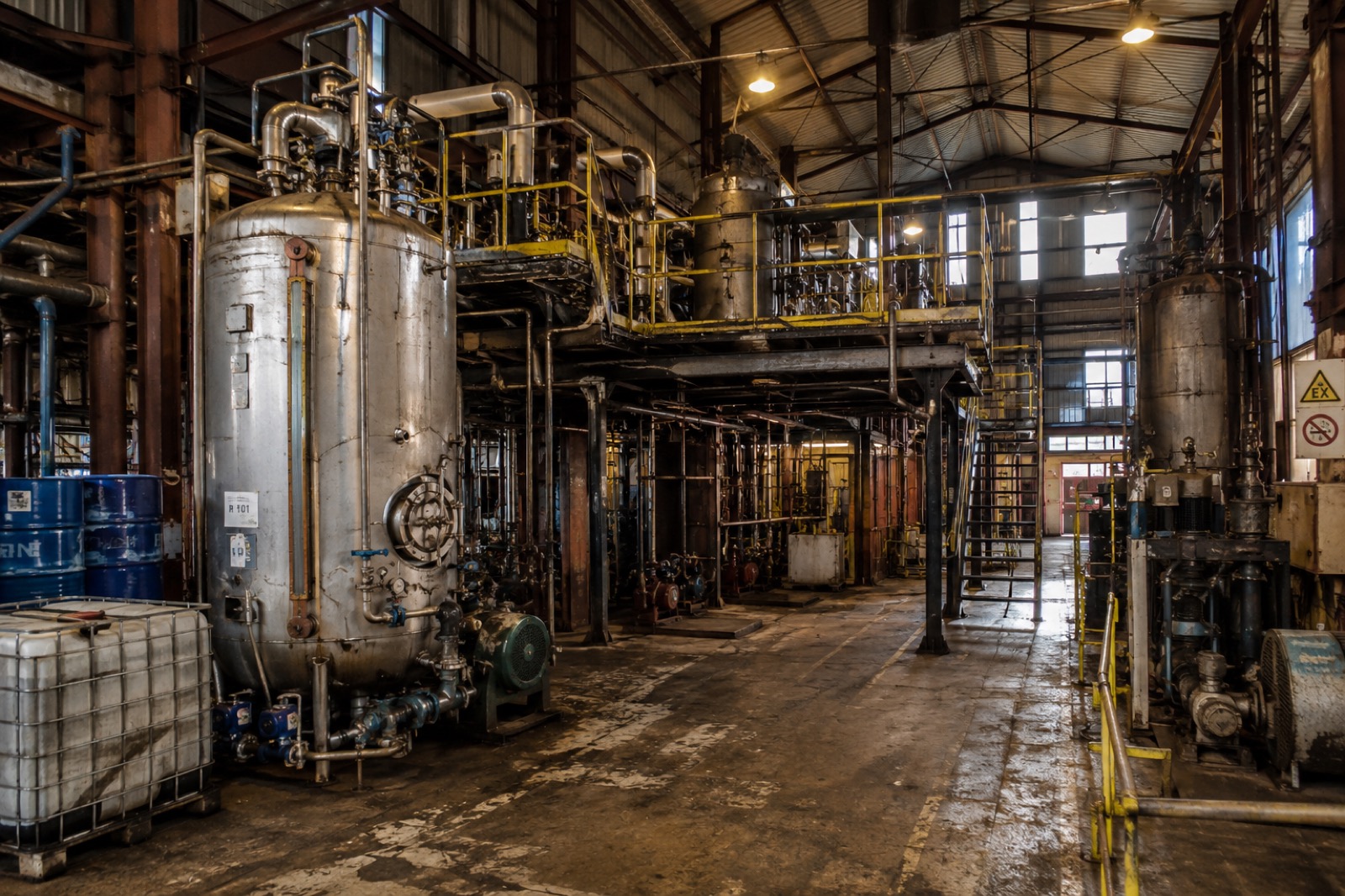
Is a factory from 1975 automatically non-compliant under ATEX?
This is exactly where things often go wrong in practice. With older installations, ATEX is sometimes approached in an overly black-and-white way. One side says: “No ATEX marking, therefore reject it.” The other side says: “This installation has been running for fifty years, so it must be safe.” Both lines of reasoning are technically and legally too simplistic.
This is exactly where things often go wrong in practice. With older installations, ATEX is sometimes approached in an overly black-and-white way. One side says: “No ATEX marking, therefore reject it.” The other side says: “This installation has been running for fifty years, so it must be safe.” Both lines of reasoning are technically and legally too simplistic.
Explosion safety does not start with the year of construction. It starts with the question whether an explosive atmosphere can be formed. Are we dealing with gas, vapour, mist or dust? Is the installation located indoors or outdoors? Is there natural or mechanical ventilation? Are the quantities relevant? Are minimum quantities exceeded? Can a flammable mixture arise during normal operation, malfunction, filling, emptying, cleaning or maintenance?
Only after that comes the question of which zone is created and which measures are required. But the year of construction does matter. A factory from 1975 should not be assessed as if it had been designed and built as a new installation in 2026. People in 1975 were not ignorant. Even before ATEX, there were rules, permits, safety insights, standards, insurance requirements and technical measures against fire and explosion hazards. An old installation may therefore have been carefully built according to the state of the art applicable at that time.
That historical context must be taken into account. At the same time, the year of construction does not provide an exemption from current safety obligations. An old installation may only continue to operate if the employer or operator can demonstrate today that the explosion risk is controlled. This means: a current assessment of substances and processes, current hazardous area classification, assessment of ignition sources, suitable technical and organisational measures, inspection, maintenance, instruction and a defensible explosion protection document.
The most difficult situations arise with modifications. An installation from 1975 is rarely still completely the installation from 1975. Other substances may have been introduced, capacities increased, filters replaced, ventilation systems modified, frequency converters installed, control systems renewed, pipework changed, cleaning agents replaced or process steps added. Every relevant change can create a new assessment point.
In that case, it is no longer possible simply to rely on “old law” or on the original design. The modified situation must be reassessed. The same applies to equipment. A motor, mixer, fan or sensor from before 2003 does not automatically need to have modern ATEX 114 marking. But that does not mean it may remain in a zone without evidence. Its suitability must be demonstrable. Not by saying “it has been running well for years”, but through a technical assessment of possible ignition sources, surface temperatures, mechanical friction, electrical condition, electrostatic charging, maintenance history, inspection results and suitability for the classified zone.
The correct conclusion is therefore nuanced: an old factory does not have to be shut down simply because it is old. But an old factory may not continue operating simply because it is old either. The decisive criterion is demonstrability. Can an explosive atmosphere occur? Are the quantities relevant? Has the zone been correctly classified? Is the equipment suitable? Have modifications been assessed? Is the residual risk controlled? Has this been recorded in an explosion protection document that is technically and legally defensible?
If the answer to these questions is yes, then even an installation from 1975 can be operated safely and responsibly. If the answer is no, then the year of construction is not the problem — the lack of evidence is.
The year of construction provides context.
ATEX requires demonstrable control.
And safety is not proven by age, but by assessment, measures and assurance.
Next step
Do you want to know whether temporary work, maintenance or modifications affect your ATEX assessment?
Exquintia reviews EPD, zoning, equipment and work permits as one technical whole, so your documentation remains defensible during inspection, audit or supervision.