
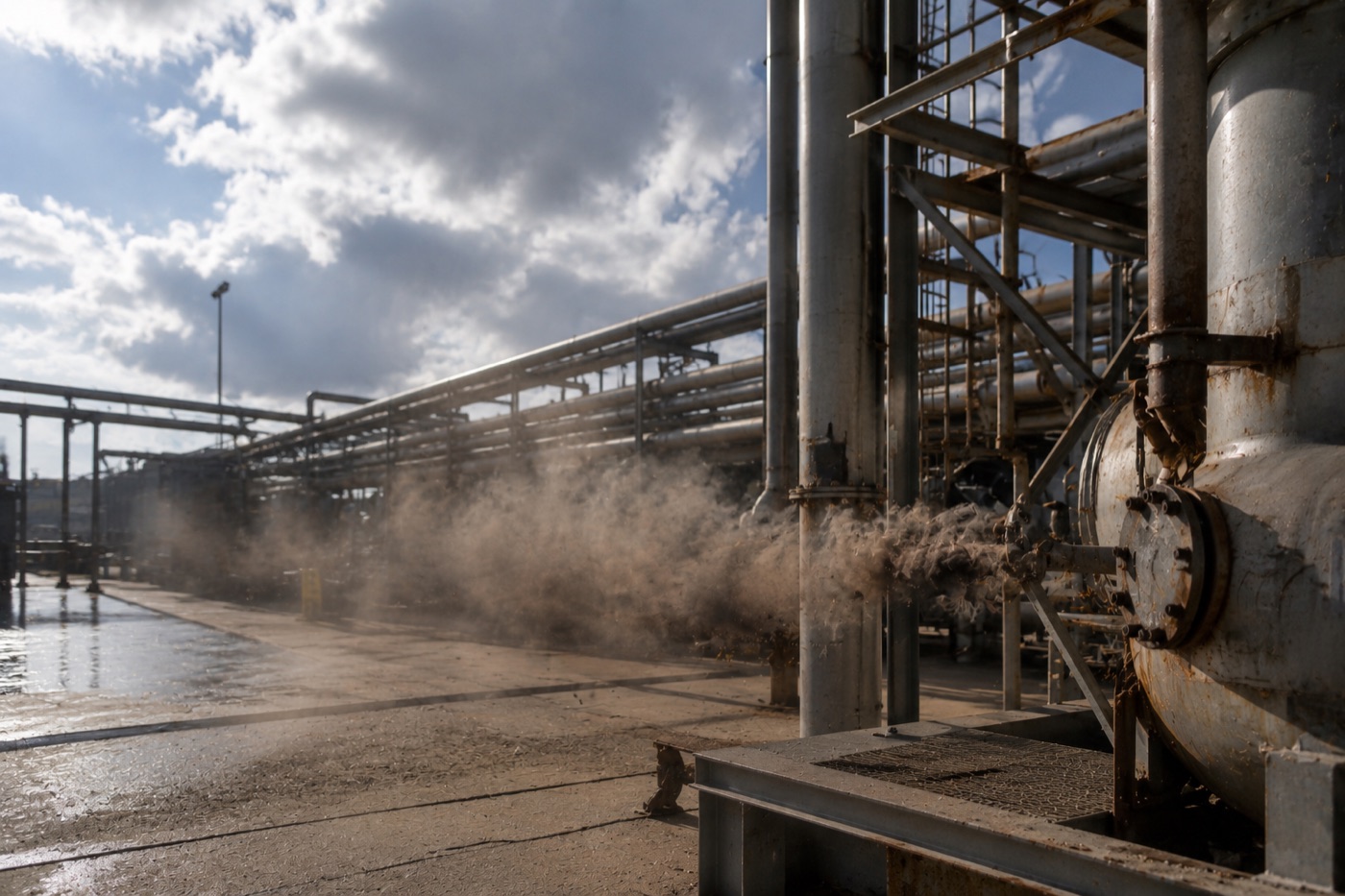
Outside does not mean safe
When assessing explosion safety, significant attention is often given to hazardous area classification, equipment certification, and potential ignition sources. Rightly so. Yet a sense of safety often emerges as soon...
When assessing explosion safety, significant attention is often given to hazardous area classification, equipment certification, and potential ignition sources. Rightly so. Yet a sense of safety often emerges as soon as an installation is located outdoors.
The reasoning is understandable. Outdoors, natural ventilation generally provides rapid dilution of released vapours, gases, or dust. However, reality is often more complex.
Wind does not follow drawings, procedures, or hazardous area classification reports. It carries released substances wherever the prevailing conditions allow them to go.
During maintenance activities, overhauls, or abnormal operating conditions, even small quantities of flammable substances may be released. Under the influence of wind, these substances can be transported to locations where hot surfaces are present, where mechanical energy is generated, or where work is being carried out that would normally not be considered an immediate hazard.
This leads to an important lesson for everyone involved in the design, maintenance, inspection, and operation of industrial installations. Explosion safety does not begin with the question of whether an installation is located indoors or outdoors. The first question should be whether an explosive atmosphere can develop under realistic conditions, how it may disperse, and which potential ignition sources it could encounter.
An installation may fully comply with applicable standards, be well maintained, and have been correctly inspected. Nevertheless, unforeseen combinations of process conditions, weather influences, and work activities can create situations that remain virtually invisible during normal operation.
For that reason, scenario-based thinking within ATEX deserves just as much attention as formal hazardous area classification. It is not enough to consider only what normally happens. Equal attention should be given to what may happen when circumstances unexpectedly converge.
After all, the wind does not read a hazardous area classification drawing.
#ATEX #IECEx #ExplosionSafety #ProcessSafety #ATEX153 #ATEX114 #IEC60079 #RiskAssessment #HazardousAreas #IndustrialSafety #AssetIntegrity #Maintenance #Inspection #Engineering #ChemicalIndustry #FoodIndustry #SafetyCulture #Exquintia
Sources
IEC 60079-10-1 — Explosive Atmospheres – Classification of Areas – Explosive Gas Atmospheres. IEC 60079-14:2024 — Explosive Atmospheres – Design, Selection and Installation of Electrical Installations. IEC 60079-17 — Explosive Atmospheres – Inspection and Maintenance of Electrical Installations. NPR 7910-1:2020+C1:2021 — Hazardous Area Classification with Respect to Explosion Hazards from Explosive Gas Atmospheres. EN 1127-1 — Explosive Atmospheres – Explosion Prevention and Protection – Part 1: Basic Concepts and Methodology.
Safety is not determined by the location of an installation, but by understanding the conditions under which an explosive atmosphere can form and be ignited.