
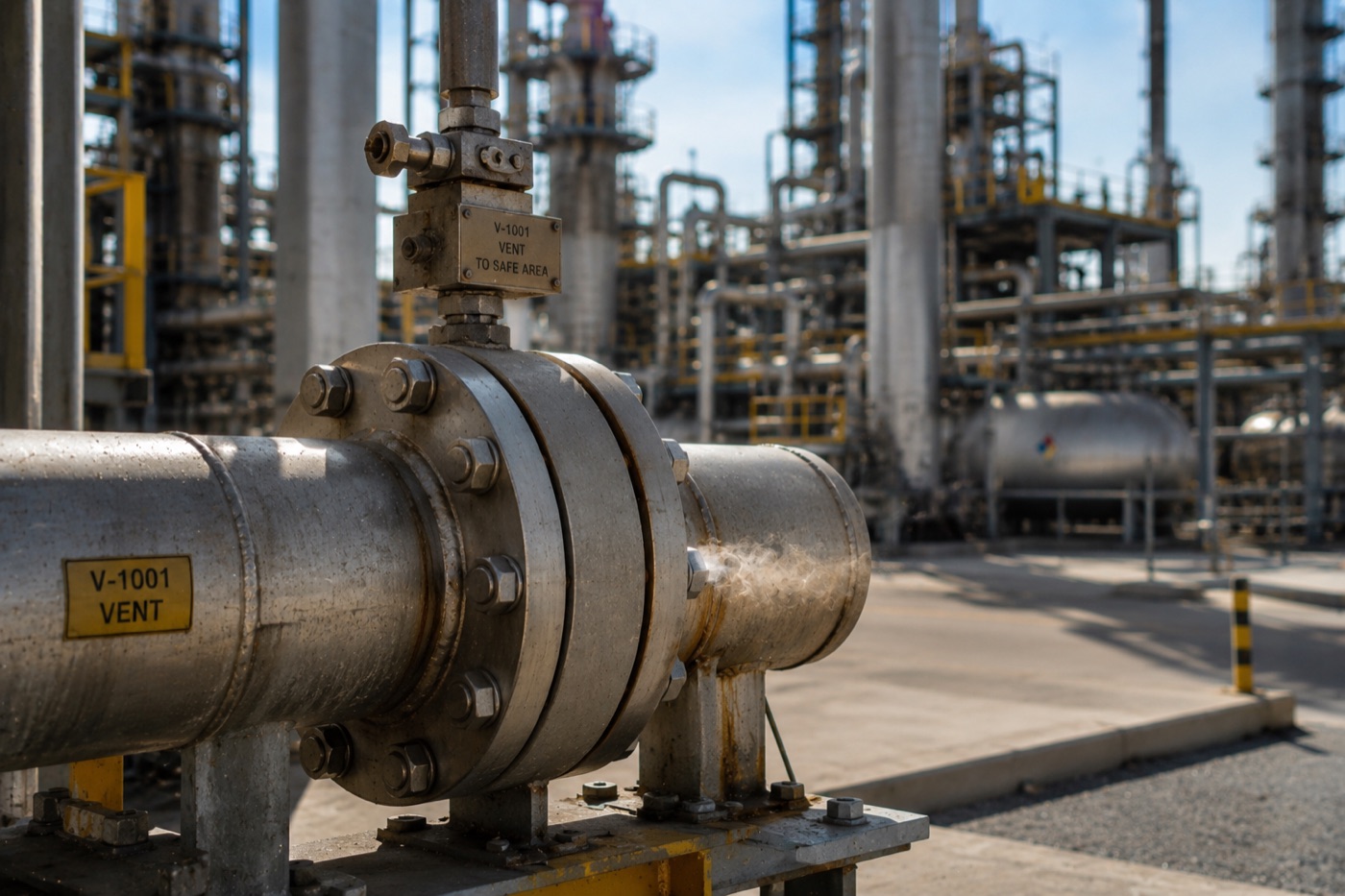
The most expensive ATEX mistake is often missing from the hazardous area classification drawing
When ATEX is discussed, attention is usually focused on hazardous areas, equipment certification, and inspections. These are the visible elements of explosion safety. However, the foundation of every hazardous area cl...
When ATEX is discussed, attention is usually focused on hazardous areas, equipment certification, and inspections. These are the visible elements of explosion safety. However, the foundation of every hazardous area classification is established much earlier.
In almost every ATEX assessment, everything starts with a single question:
Where is the source of release?
An explosive atmosphere does not arise by itself. A flammable gas, vapour, mist, or combustible dust must first be released. Only then can it be determined whether an explosive atmosphere may form, how frequently this may occur, and which hazardous area classification applies.
This is precisely where the most significant mistakes are made in practice.
A vent, filling point, sampling point, manway, flange connection, or overflow can all be sources of release. The assessment of that source ultimately determines the extent of the hazardous area, the required equipment, the maintenance strategy, and sometimes even the investment costs of an entire project.
Within ATEX and IEC 60079, a distinction is made between continuous, primary, and secondary sources of release.
A continuous source of release emits flammable gas or combustible dust continuously or for long periods. A primary source of release emits during normal operation. A secondary source of release is expected to remain closed during normal operation and only releases flammable material as a result of abnormal conditions, deterioration, wear, or equipment failure.
A second question is equally important:
Is the source of release choked or non-choked?
A choked release restricts the discharge through a small opening, limiting the quantity of gas or dust released. A non-choked release can result in a substantially higher release rate, with direct consequences for both the level of risk and the resulting hazardous area classification.
The consequences of an incorrect assessment often remain unnoticed for years.
An installation may end up being equipped with unnecessarily expensive explosion-protected equipment. The opposite also occurs. An underestimated source of release may result in a hazardous area that is too small, allowing potential ignition sources to remain unnoticed within the actual risk area.
For that reason, explosion safety does not begin with the question of which zone is present.
The first question should always be:
Which source of release forms the basis of this hazardous area classification, and has it been assessed correctly?
A hazardous area classification drawing is ultimately only the result of an analysis.
The quality of that analysis is determined by the quality of the source-of-release assessment.
That is where explosion safety begins.
https://exquintia.com References – Europe
EN IEC 60079-10-1 — Explosive Atmospheres – Classification of Areas – Explosive Gas Atmospheres. EN IEC 60079-10-2 — Explosive Atmospheres – Classification of Areas – Explosive Dust Atmospheres. EN IEC 60079-14 — Explosive Atmospheres – Design, Selection and Installation of Electrical Installations. EN 1127-1 — Explosive Atmospheres – Explosion Prevention and Protection – Basic Concepts and Methodology. Directive 1999/92/EC (ATEX 153). Directive 2014/34/EU (ATEX 114).
References – United Kingdom
DSEAR 2002 (Dangerous Substances and Explosive Atmospheres Regulations). EPS Regulations 2016 (Equipment and Protective Systems Intended for Use in Potentially Explosive Atmospheres Regulations). BS EN IEC 60079-10-1. BS EN IEC 60079-10-2. BS EN IEC 60079-14. BS EN 1127-1. HSE Approved Code of Practice L138.
An incorrect hazardous area classification is often the result of an incorrectly assessed source of release. This makes source-of-release classification one of the most critical steps in any ATEX risk assessment and hazardous area classification study.