
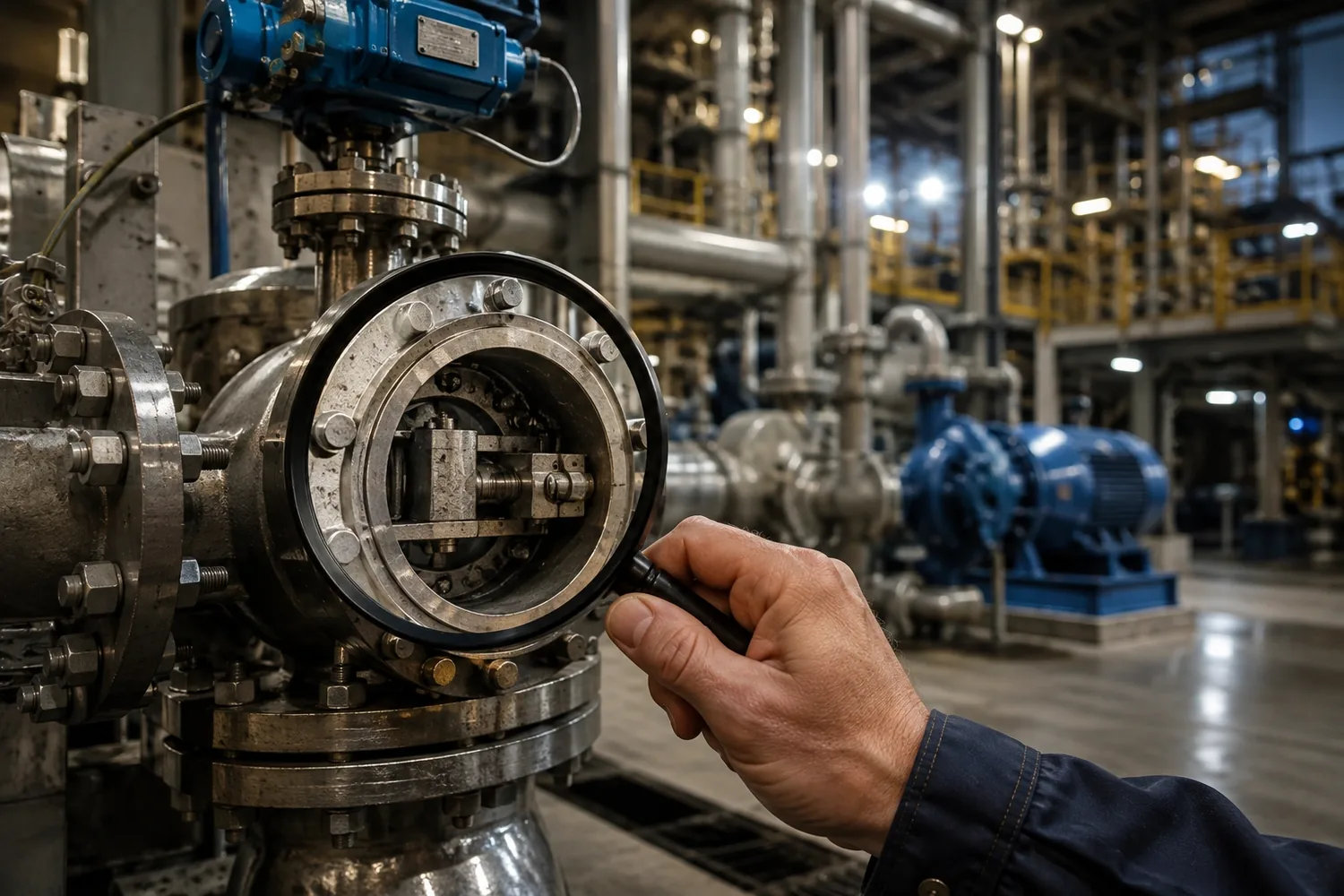
…but by the quality of the technical assessment on which it is based.
Risk assessments form the foundation for the design, construction, operation and modification of industrial installations. The technical decisions made during this process often influence safety, maintenance, asset availability and investment decisions for decades.
However, the quality of a risk assessment does not arise automatically. Assessing explosion risks requires far more than applying standards or following a predefined methodology. The real challenge is understanding an installation as one integrated technical system.
Operating conditions change, assets age, maintenance strategies evolve and modifications become part of the normal lifecycle of an installation. At the same time, engineering knowledge continues to expand in areas such as mechanical ignition sources, process influences, software, human factors and the interaction between multiple technical disciplines. As a result, the focus is steadily shifting from evaluating individual components to understanding the behaviour of complete systems.
This reflects the direction of both European and international legislation and standards. The ATEX Directives, the EN IEC 60079 series, EN ISO 80079-36/-37, EN ISO 12100, and within the European Union the Machinery Regulation (EU) 2023/1230, increasingly promote a lifecycle approach to engineering risk assessment. In the United Kingdom, equivalent principles continue to apply through DSEAR, the Equipment and Protective Systems Intended for Use in Potentially Explosive Atmospheres Regulations (EPS) and the BS EN IEC 60079 series.
The quality of a risk assessment is therefore not determined by the volume of documentation, but by the ability to identify hazards, understand system interactions and justify engineering decisions with sound technical reasoning.
Perhaps this is the most significant development in modern explosion safety. The value of an ATEX risk assessment is ultimately determined not by the document itself, but by the quality of the technical assessment on which it is based.
References
- ATEX Directive 2014/34/EU
- ATEX Workplace Directive 1999/92/EC
- EN IEC 60079 series
- EN ISO 80079-36
- EN ISO 80079-37
- EN ISO 12100
- Machinery Regulation (EU) 2023/1230
- UK Dangerous Substances and Explosive Atmospheres Regulations (DSEAR)
- UK Equipment and Protective Systems Intended for Use in Potentially Explosive Atmospheres Regulations (EPS)