
Managers do not buy ATEX. They buy continuity, availability and controlled risk.
The most dangerous change in a plant sometimes costs less than €100.
Changes in a factory can appear insignificant:
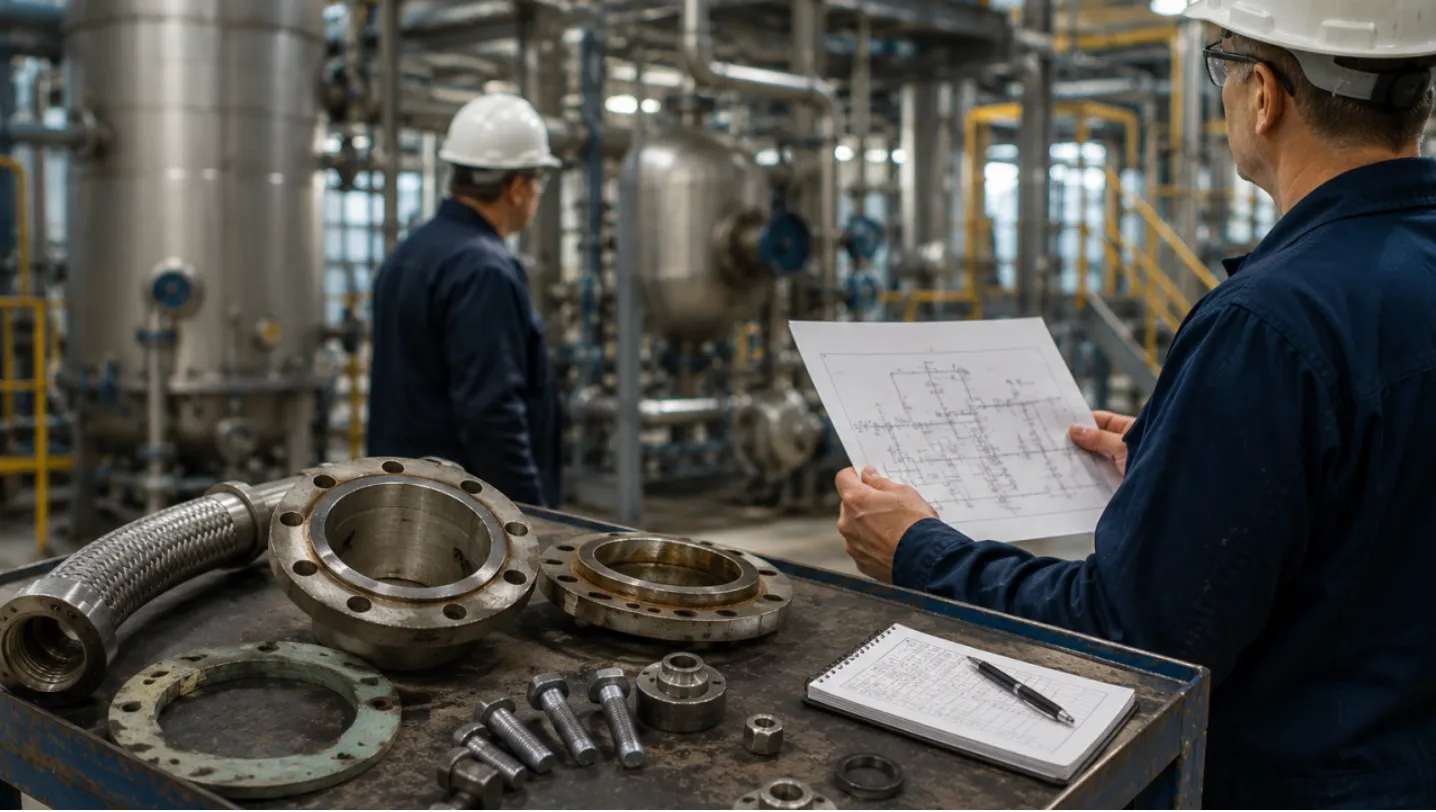
a new hose;
a different gasket;
an additional fan;
a different raw material;
a higher rotational speed.
Technically, each of these changes may seem logical. The process continues to run, production remains available and nobody immediately sees a fundamental change in the explosion risk. Yet this is exactly where many industrial incidents begin.
In explosive atmospheres, safety is not determined by a single component or a single certificate. It is determined by the relationship between the substance, the process, the equipment, the installation conditions and the way the plant is operated and maintained.
A new raw material may have a lower minimum ignition energy or different dust explosion characteristics. A different gasket may change the emission behaviour of flammable vapours or gases. An additional fan may alter airflows and therefore influence the dispersion, dilution or accumulation of an explosive atmosphere. A higher rotational speed may increase surface temperatures, friction, bearing loads or the probability of mechanical ignition sources.
The change itself may cost only a few euros.
The consequences can cost millions.
That is why explosion safety must never be treated as a one-off assessment. Under the European ATEX workplace framework, the employer must assess and control the risks arising from explosive atmospheres. In the United Kingdom, the same principle is embedded in DSEAR: risks from dangerous substances, including fire and explosion risks, must be assessed, eliminated or reduced so far as is reasonably practicable.
This means that every relevant change to a process, installation, substance, operating mode, ventilation system, cleaning regime, maintenance strategy or spare part specification can affect the original risk assessment. It may also affect hazardous area classification, the required Equipment Protection Level, ignition source control, inspection requirements and the validity of the documented explosion protection concept.
Management of Change is therefore not an administrative burden.
It is a safety barrier.
Correctly applied, Management of Change does not slow down production. It protects production. It prevents small technical adjustments from silently reducing the safety margin. It ensures that changes are assessed before they lead to increased emissions, ineffective ventilation, unsuitable equipment, higher temperatures, uncontrolled electrostatic charging or new mechanical ignition sources.
This applies equally in Europe and in the UK. Whether the framework is described through ATEX, DSEAR, EN IEC 60079, EN 1127-1 or EN ISO 80079, the technical principle remains the same: the original assumptions must still match the real installation.
For management, the key question is not whether a change looks small on a purchase order.
The key question is whether the change affects the basis on which the explosion risk was originally assessed and controlled.
The most expensive changes are often the ones nobody recognised as changes.
https://www.exquintia.com/
#ATEX #DSEAR #ExplosionSafety #ManagementOfChange #ProcessSafety #IEC60079 #EN1127 #ISO80079 #AssetIntegrity #RiskManagement #ChemicalIndustry #FoodIndustry #SafetyCulture #Exquintia