
Explosion protection is increasingly found in industries where nobody expects it.
When explosion protection is mentioned, most people immediately think of refineries, petrochemical plants or fuel storage terminals. That perception is understandable, but it no longer reflects today's industrial reality.
The energy transition, circular economy and rapid technological innovation are introducing explosive atmospheres into industries that have traditionally never considered themselves part of the ATEX landscape.
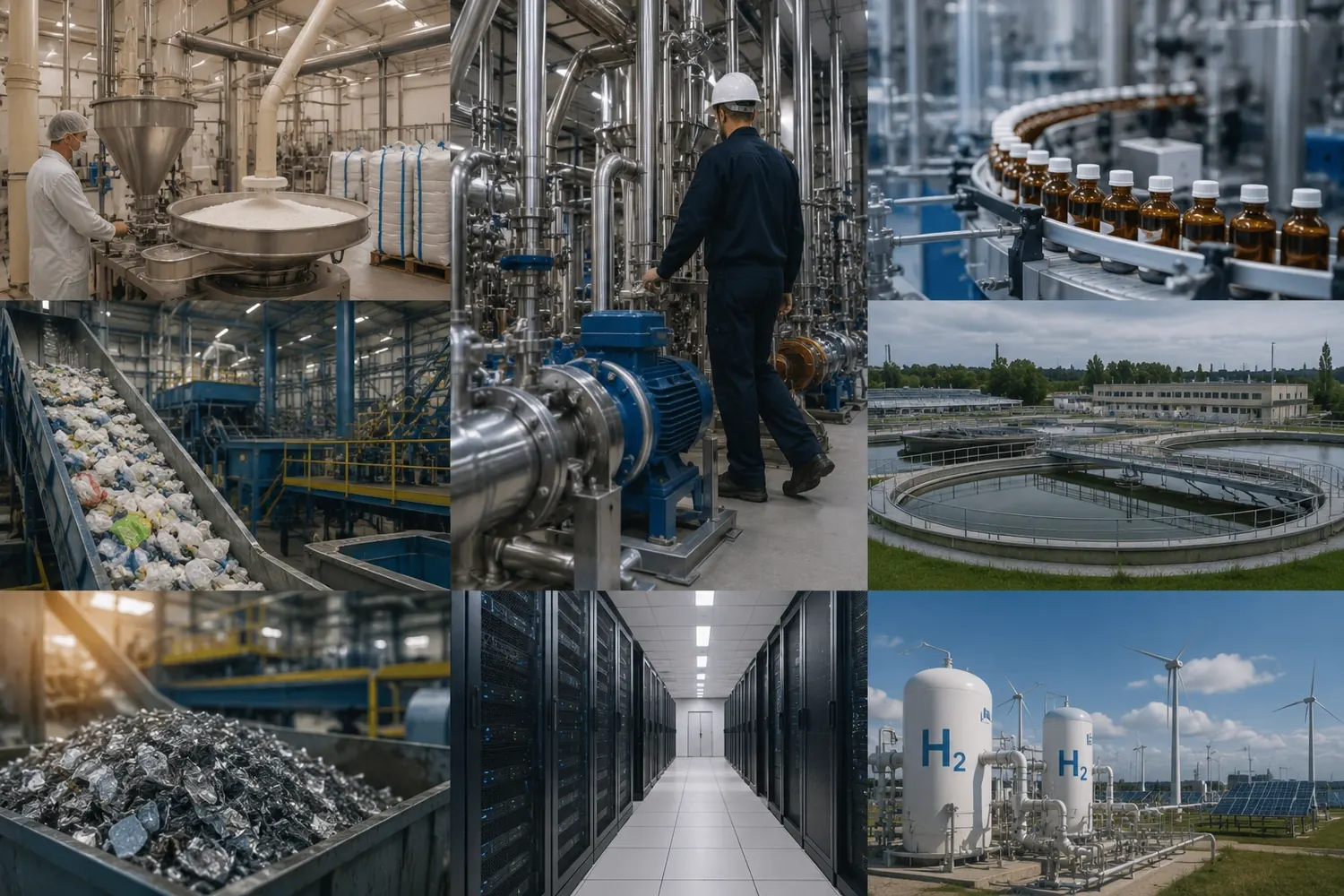
Food manufacturers process large quantities of starch, sugar, milk powder, cocoa and spices capable of generating combustible dusts. Pharmaceutical facilities combine sterile production with flammable solvents. Recycling plants handle lithium batteries, plastics and combustible metal dusts. Wastewater treatment facilities increasingly produce biogas and hydrogen. Data centres are investigating hydrogen-powered backup systems, while manufacturers of bio-based materials, additive manufacturing powders and sustainable fuels are introducing entirely new process technologies.
What makes this development particularly significant is that explosion hazards rarely appear because an organisation changes industry. They emerge because the technology changes.
An energy-efficient dryer, an upgraded solvent recovery system, a different raw material or increased production capacity may fundamentally alter the engineering assumptions behind hazardous area classification and explosion risk assessments, even though the final product remains unchanged.
Explosion protection is therefore evolving far beyond compliance with the ATEX Workplace Directive (1999/92/EC) in the European Union or DSEAR in the United Kingdom. It is becoming an essential element of Asset Integrity, Process Safety and sustainable engineering throughout the entire lifecycle of industrial facilities, supported by the engineering principles of the IEC 60079 series.
Tomorrow's most resilient organisations will not necessarily operate the largest chemical plants. They will be the companies that recognise early that technological innovation also creates new explosion hazards—and engineer those risks into the design from the very beginning.