
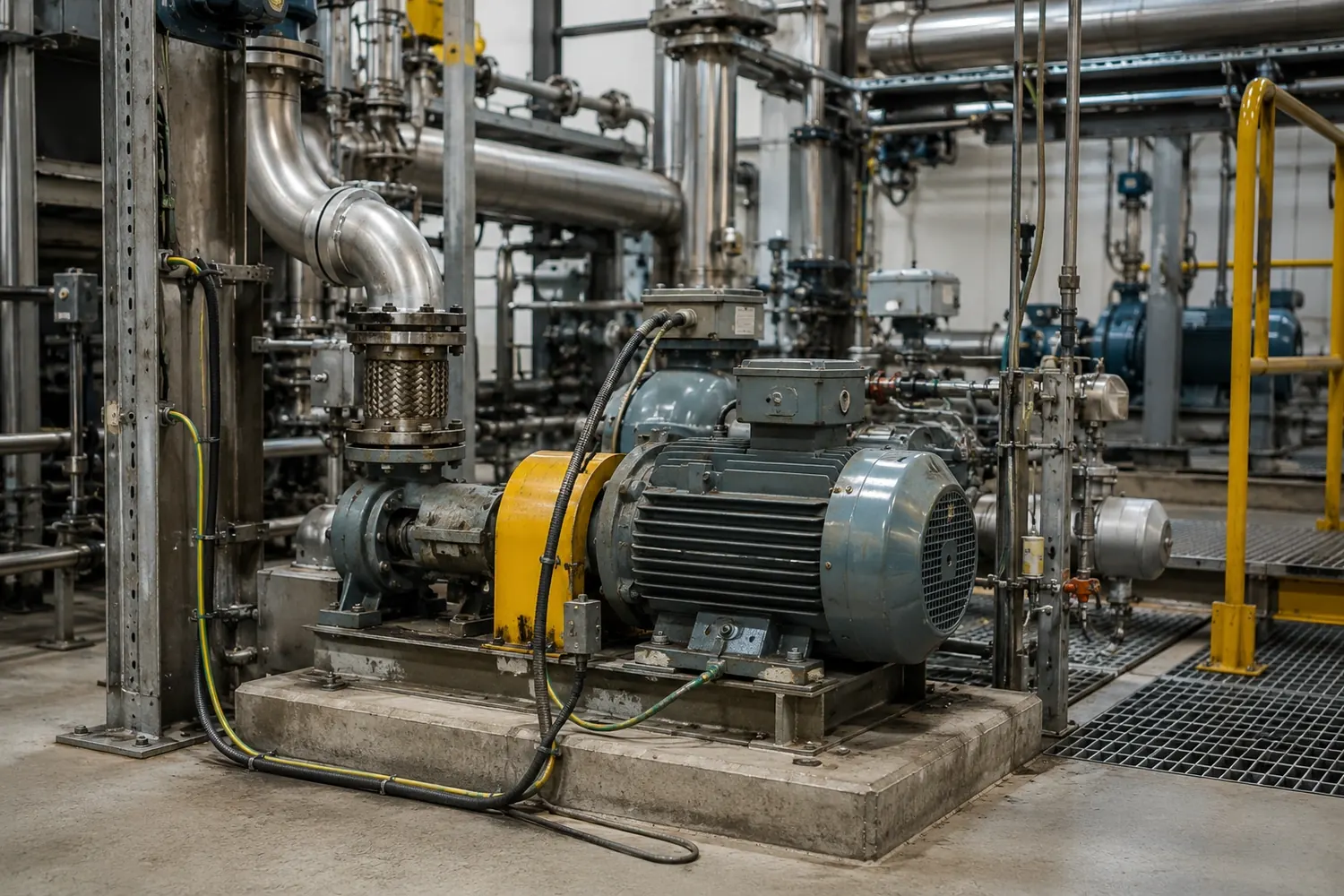
A CE Marking Does Not Automatically Mean an Explosion-Safe Installation
“The machine carries a CE marking, so it can safely be installed in an ATEX hazardous area.”
It is a statement I hear regularly. Yet it remains one of the biggest misconceptions in industry.
A CE marking demonstrates that a machine complies with the applicable European product legislation, including the Machinery Directive 2006/42/EC and, from 20 January 2027, the Machinery Regulation (EU) 2023/1230. However, this does not automatically demonstrate that the complete installation is safe for use in a potentially explosive atmosphere.
The explosion safety of an installation depends on far more than the machine itself.
It is determined by the hazardous area classification, the properties of the substances present, ventilation effectiveness, process conditions, potential ignition sources in accordance with EN 1127-1, earthing and bonding arrangements, the interaction with other equipment, the control system, maintenance activities, and every modification made throughout the installation’s operational lifetime.
It is often during the integration of a machine into an existing process plant that new risks are introduced—risks that were never assessed during the machine’s original conformity assessment.
In practice, I regularly encounter situations where a fully CE-marked machine has been connected to an existing process installation. During inspection it becomes apparent that the ventilation capacity is no longer adequate, the hazardous area classification has changed, a newly installed variable speed drive generates additional heat, or changes in the product characteristics have altered the explosion hazard. Technically, the machine performs exactly as intended, yet the explosion safety of the complete installation can no longer be demonstrated.
For that reason, every modification—regardless of how minor it may appear—should trigger a review of the assumptions on which the Explosion Protection Document (EPD) is based, as required under Directive 1999/92/EC (ATEX Workplace Directive). A modified extraction system, a different product, altered process parameters or even a software update may be sufficient to change the explosion risks.
This principle applies equally within the United Kingdom. Following Brexit, ATEX product certification has largely been replaced by the UKEX marking for equipment placed on the market in Great Britain. Nevertheless, employers remain responsible under the Dangerous Substances and Explosive Atmospheres Regulations (DSEAR) for assessing explosion risks, classifying hazardous areas and ensuring that installations remain safe throughout their operational life. A CE or UKEX marking alone does not fulfil these obligations.
Explosion safety is not a characteristic of a single machine.
Explosion safety is the result of sound engineering, correct integration, effective management of change, competent inspection, proper maintenance and continuous control throughout the entire life cycle of an installation.
Therefore, the most important question is not:
“Does this machine carry a CE or UKEX marking?”
A far more important question is:
“Has it been demonstrably assessed that this machine, when operating within this specific installation and under these actual operating conditions, does not introduce an unacceptable explosion risk?”
Ultimately, that distinction determines whether an organisation merely complies with product legislation or genuinely operates a safe installation.
How does your organisation ensure that machine modifications, plant extensions or equipment replacements do not introduce new explosion hazards?
I look forward to hearing your experiences and views.
#ATEX #UKEX #DSEAR #MachineryRegulation #MachineSafety #ExplosionProtection #ProcessSafety #IEC60079 #EN1127 #AssetIntegrity #RiskAssessment #Engineering #IndustrialSafety #ExInspection