
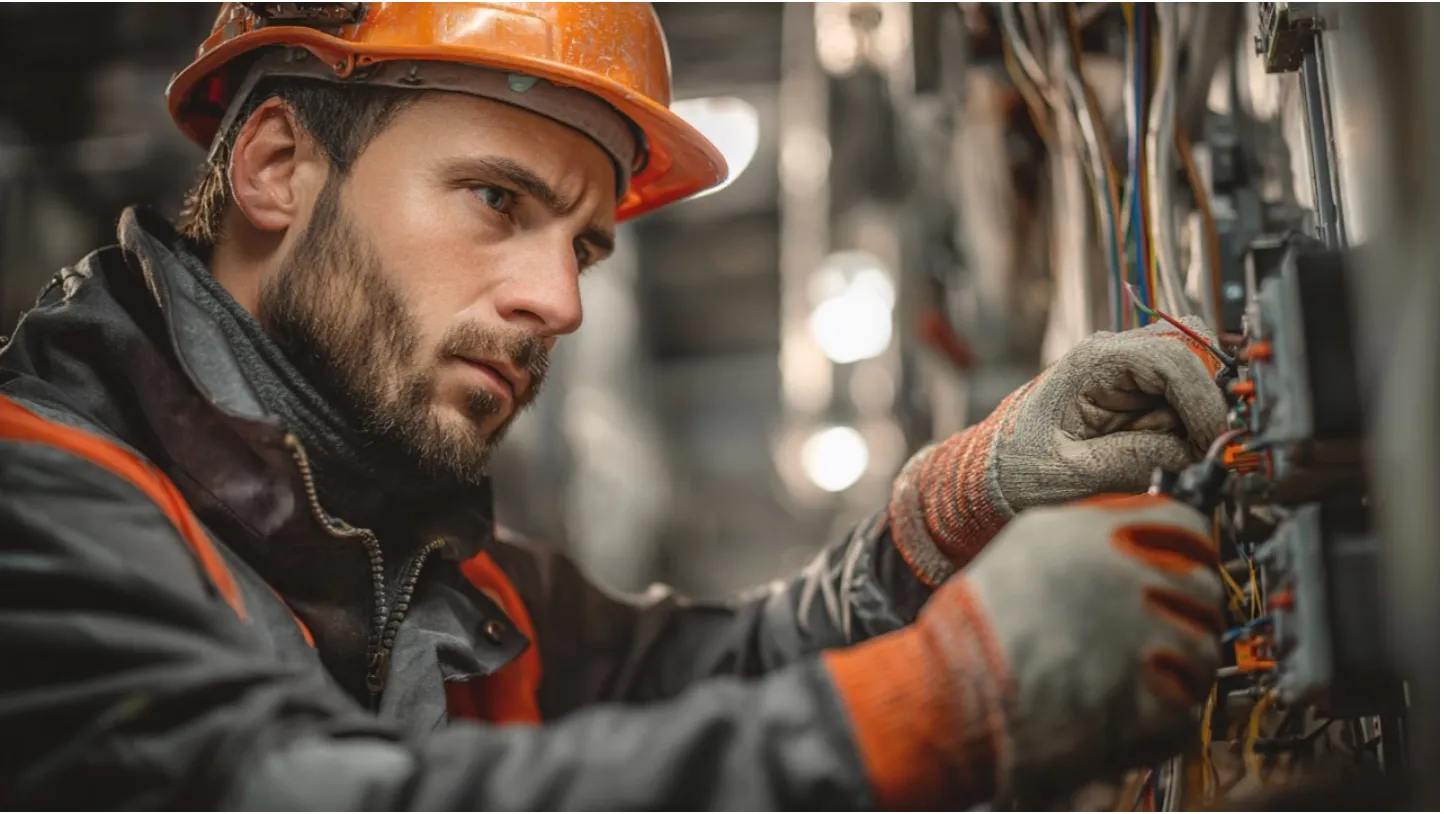
ATEX Installations Are Safe… Until Maintenance Begins
The installation is certified.
The hazardous area classification has been completed.
The explosion protection documentation is up to date.
On paper, everything appears to be under control.
Until maintenance starts.
A flange is opened.
A motor is replaced.
A temporary light is connected.
And exactly there, the greatest risk often appears. Not in the original design, but in the deviation from it.
Under the European ATEX workplace framework, employers must manage explosion risks during all phases of work. In the United Kingdom, the same principle is reflected in DSEAR, where dangerous substances and explosive atmospheres must be assessed and controlled not only during normal operation, but also during maintenance, inspection, breakdowns, cleaning and foreseeable abnormal situations.
Yet in practice, maintenance activities are still too often treated as temporary and therefore implicitly as low risk.
That is a fundamental mistake.
During maintenance, the system changes.
Closed systems become open systems.
Controlled releases can become uncontrolled releases.
Certified Ex equipment may be temporarily replaced by portable or non-Ex equipment.
Stable process conditions may no longer exist.
Ventilation patterns, isolation status and ignition source control can change within minutes.
At that moment, the original hazardous area classification may no longer represent the actual situation. A classification based on normal operating conditions under EN IEC 60079-10-1 or EN IEC 60079-10-2 does not automatically remain valid when equipment is opened, drained, cleaned, purged, bypassed or temporarily modified.
What remains is a dynamic situation that requires a current task-based risk assessment.
In that context, companies often rely on procedures, permits to work and toolbox talks. These are important barriers, but they are not sufficient when the technical basis is missing. A permit does not make a non-assessed ignition source safe. A toolbox talk does not replace verification of atmosphere, isolation, bonding, equipment suitability, ventilation and control of hot surfaces or mechanical energy.
Temporary equipment deserves particular attention. Portable lighting, pumps, fans, measuring instruments, power tools and temporary electrical supplies must be assessed against the actual hazardous area, the expected atmosphere and the conditions of use. Where suitable certified equipment is required, it must be selected, installed and used accordingly. Where temporary deviations are considered, they must be technically justified, time-limited, formally authorised and supported by additional control measures such as gas testing, forced ventilation, isolation, inerting, bonding, supervision and ignition source control.
This is where explosion protection and maintenance management meet.
The uncomfortable reality is that the installation itself is not always the greatest explosion risk. More often, the risk arises from the interaction between people, process conditions and temporary deviations from the original design.
Explosion safety does not stop at commissioning.
It starts again with every intervention.
The most dangerous installation is not always the one that obviously fails to comply. It may be the one that appears to comply so well that nobody questions what happens when maintenance changes the conditions.
https://exquintia.com/
#ATEX #DSEAR #ExplosionSafety #Maintenance #ProcessSafety #HazardousAreas #IEC60079 #RiskManagement #PermitToWork #AssetIntegrity #IndustrialSafety #SafetyCulture #Exquintia